
It is important a car seat fits not just the vehicle but the driver for ultimate comfort.
Unsure what seat to choose? Contact us with answers to the below questions and we can assist with the best recommendation for you.
There are many factors to consider when choosing a new kart seat.
If you have had a seat in the past. Do you know the size and shape?
Shape does not make as much difference as the teams would have you believe, but they will be nervous of miss positioning the seat and may want you to use the shape they are used to fitting.
This is fine until the seat is not the right fit for you. An ill-fitting seat can cause a driver to damage their body or hang on the wheel, neither are good for ultimate performance.
Different shapes put in the chassis with the drivers back in exactly the same place, made with the same materials will pretty much handle the same.
That said a significant angle change of the back will alter the handling especially for bigger driver and this should be looked at separately.
This is important as a good fit is essential for the protection of the driver and the handling of the kart. If a driver is loose in a seat he will pull to steer, pulling himself out of the kart, making it bounce at the slightest provocation.
To assess whether or not the size of a seat that you have in your possession is correct, sit the driver should in the seat and feel the gap over the leg bone (Femur), the hip bone (Pelvis) and down the length of the ribs, from top to bottom. This must be done with any rib protection in place, but the race suit is not so important unless it has integral padding.
When worn tight, the gap at the front of the protector should not move inwards as the driver sits back in the seat. Once sat back in the seat, it should be difficult to squeeze your fingers between the seat, your ribs, hip and leg bones.
It’s important that all the points are evenly pressured and no one element is either loose or pinching.
If one area feels loose, some firm foam stuck between driver and seat is acceptable. If it is pinching you need a larger size.
To assess the size without having a seat in your vicinity, we find that denim Jeans waist size, weight and height are good indicators. Coupled with information about a tightly pulled chest circumference and rib protector type. A rib protector that is too big does not protect the ribs.
An over thick rib protector can make two sizes difference and leave you with very loose hips, so this is to be avoided (by purchasing a P1 Rib Protector) or accounted for with a WT (Wide top) T11 seat.
For more information, please see our
.Alternatively email us with answers to the below questions and they can make the best recommendation for you.
Currently most karts either use the VG rigidity or the “t” rigidity. These are the two grades softer than standard and most current chassis/engine combinations of full size karts will use these.
Most 60 cc Minikart two strokes use the softest VTi and four stroke chassis are less affected due to their torque so standard rigidity is OK. With karts that have engines with low bottom end torque karts helping the engine is most important so they tend to use a soft flexible seat. A kart with more bottom end torque will use a stiffness according to handling requirements.
That should be enough for most people to decide but here is a more in depth explanation. The impact that rigidity has on the chassis are sometimes not logical. It is common for people to make the statements “I need more grip” or “I need less grip” when they are asking me which seat to buy.
I tell them that seats do not give or loose grip, but by changing the seat rigidity you can displace the weight differently on each tyre and it can alter the way the weight is transferred to each tyre during cornering.
Due to the different coefficient of friction available from the track surface you may get caught out if you try and equate grip with seat stiffness.
For example, you can get the grip from the tyres in two ways, a large amount of tyre rubber contact, or from downward pressure onto the two outside tyres.
A stiff seat will transfer the weight to the outside front tyre more, a soft one less.
A soft seat will allow the rear wheel to lift more and a stiff one will keep the rear inner tyre down.
A soft seat which is not transferring weight adequately to the outside front tyre can effectively cause understeer, but likewise a stiff seat keeping both rear tyres in contact with the track can push the front on and also cause understeer.
The same problem caused by two completely different directions in setup.
As a tendency but not a rule, we tend to find that low powered karts (Or karts with weak bottom end torque like Rotax Max) prefer a soft seat like a VG for Max, or the even softer VTi for Minikarts.
This lets the inside wheel lift more and results in the chassis coming out of the corner better with less drag from the inside wheel on the engine.
Also, we find that if you have a kart with more torque such as an X30, OK or KZ the seat used more commonly is a T11t.
This is because with more power and lateral forces, the inner wheel drag becomes less important and the extra weight transfer mid corner gives an advantage, as it helps put downward pressure on the front outside wheel. Strangely the stickiness of a tyre seems to have little bearing on using a soft or stiff seat.
We also have a hybrid seat specification that is stiff across the edge and soft at the front called a VGR and this keeps the back of the kart flatter but has a soft front to allow diagonal flex.
Another hybrid option is the T9.5 VRS which is rigid down the two sides but has a soft flexible centre. This reclined model seems to work well with tall drivers in cool conditions.
You can get a general feel for the type of seat that generally works best in your chassis and at the tracks that you usually run on.
Once set for your current setup the seat will rarely need to be changed.
However, be careful about thinking that it will be correct on every track and all types of kart. It is best to keep an open mind about this subject and rely on the stopwatch.
Now you have a seat that fits well it is important to mount it correctly, if half the weight of the kart is moved 5 mm out of position it will alter the balance.
Over the years the average seat position has been moving towards the rear axle and the average position is now three ‘cm’ further back than it was in the late nineties.
Please see our Seat Fitting Guide for further assistance.
It is common nowadays to wear a rib protector. However, before the mid 90’s, the only protection available was foam on the seat, or foam in a vest. Back in those days, a desperate driver with damaged ribs would pad the seat or tape a plastic number plate around the chest. It was in 1995 when using a number plate on his own ribs, that Steve Tillett had the idea to make the first hard skin rib protector, the Tillett Ribtec.
Racing karts put incredible forces on the ribcage. The lower floating ribs are only fixed one end and if the load is not spread onto them evenly, they are pushed together damaging the muscle in between. This injury is very painful and makes it impossible to continue driving. Quitting an event early because of rib damage can ruin not just one race, but a whole championship season. Therefore, using a high quality rib protector such as the P1 is vital and having one in place before any injury occurs should be a priority for every kart racer.
One of the most important aspects to consider when buying a rib protector is choosing the correct size. Many drivers will assume a large, thick rib protector would offer greater protection and parents buying for children often assume that a rib protector one size bigger will allow it to last longer. In fact, when sizing a rib protector, it should be viewed exactly as you would fit a crash helmet and should never be bought bigger than necessary. A helmet with a loose fit is dangerous, offering far less protection, you need a snug, gap free fit. The same close fit is required with a rib protector. You should always favour the smaller size if you are undecided on which one is correct.
To prevent rib protector and race suit damage:
The rib protector riding up under the arm pits is always caused by the bottom of the rib protector hitting the seat before the top. Causes for this are:
We can provide custom designs for our P1 Defender Rib Protector and P1 Rib Protector products.
If you fill in your order form with your size, design requirements, as well as submitting any logos / images you wish to include – we can then begin the design process for you upon order.
A ‘Design Deposit’ of £60.00 GBP is required on confirmation to cover design time allocation costs.
For more information, please view our ‘Privacy Policy‘ and our ‘Terms of Use‘
Yes for a cost of £75.00. We require a high definition PDF of the logo. The Tillett “T” would still need to be present on the headrest underneath your logo in a smaller size.
Yes for a cost of £80.00 per side you can have a different colour GRP than black.
Yes contact us with the design you have in mind and we can quote you on a case by case basis.
Yes we have our standard colours on the below link.
We can order in bespoke colours at a cost of £30 per thread. Thread thicknesses are different for the embroidery on the headrest and visible stitching on a panel set. This means you could be required to purchase 2 thread spools for an unusual colour.
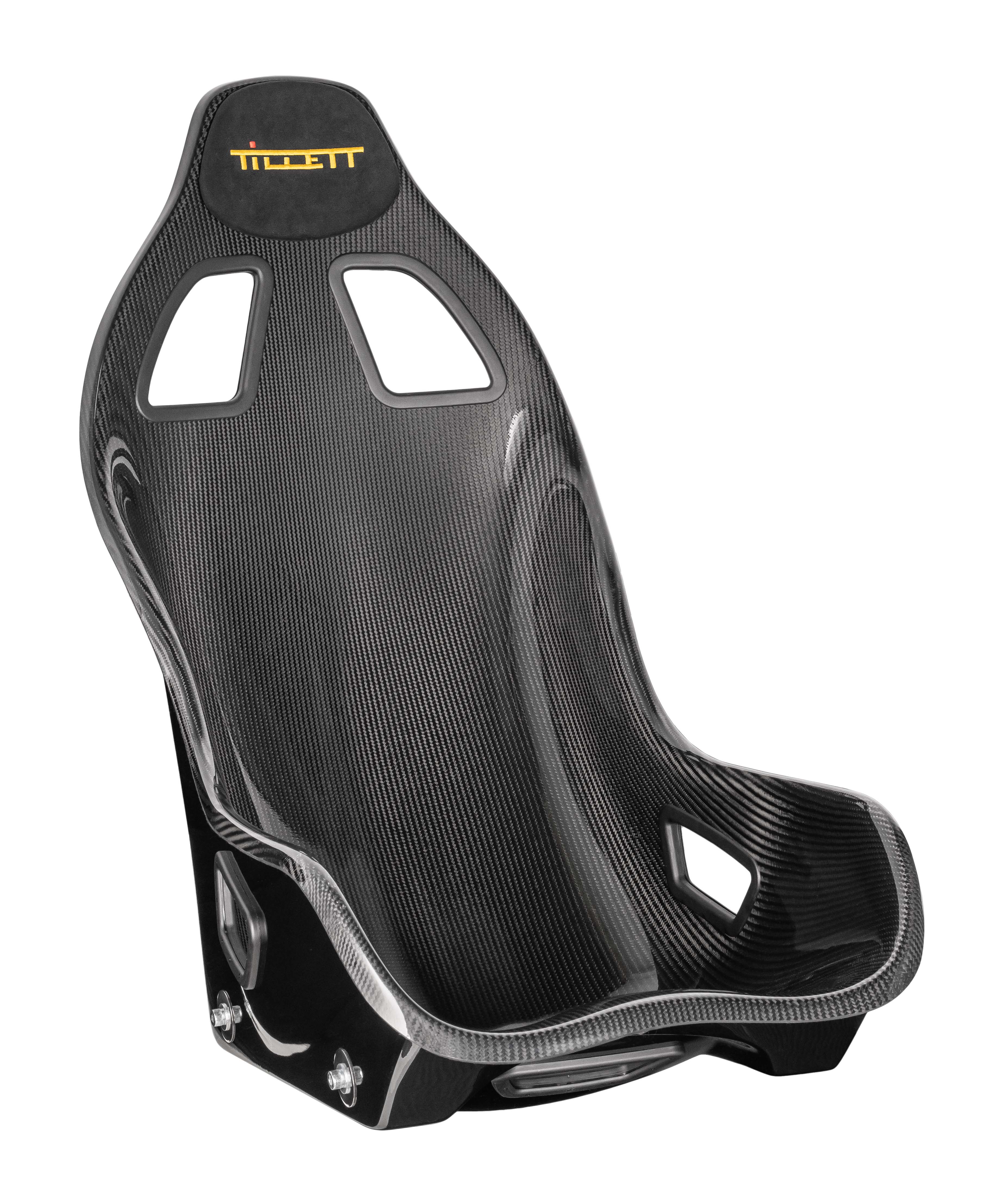
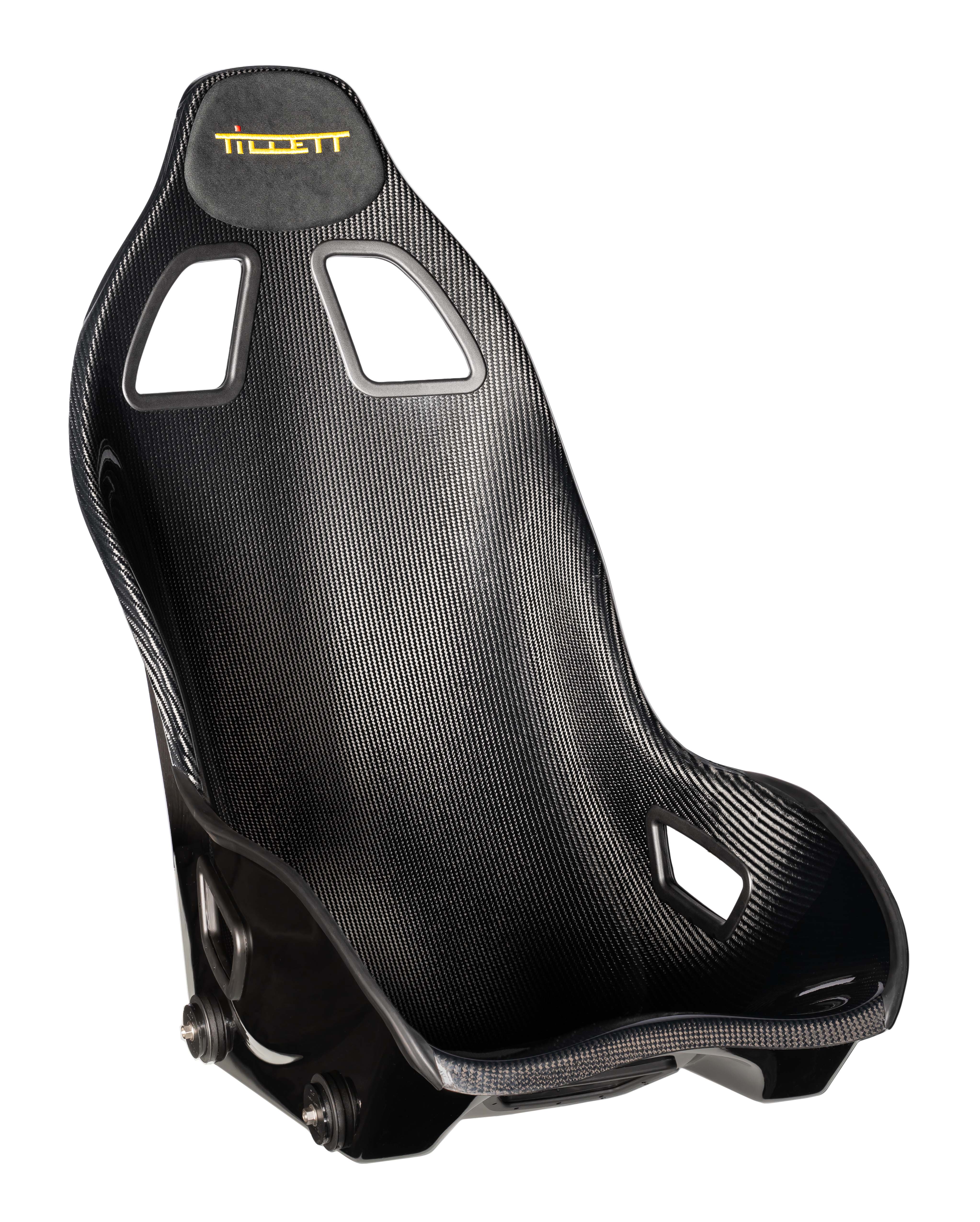
This kit is a one off for marketing purposes. We can send you over the logos if required so you can create your own Tillett sticker kit, but sadly we will not be selling these, although we do agree that they look really good! It would be great to see karts with these decals.
There are multiple ways to purchase your new Tillett Racing Seat Product, using our ‘Online Store’, as well as utilising one of our many ‘Dealers’ that are established all over the world.
The brand new Tillett Racing Seats Online Store, allows you to preview each product in detail before your purchase.
All essential information about the product is contained within each product category.
Categories are split up into: Kart Racing Seats, Car Racing Seats, Kart Racing Accessories, Car Racing Accessories, P1 Rib Protectors, Fitting Kits and Clothing.
Within each category, products ranging from Seats to Nuts & Bolts, as well as everything in-between can be viewed and added to your Cart for purchase online.
Tillett Racing Seats supply our dealers with a range of our products.
Using our ‘Dealers‘ page online, you will be able to enter your location – which will then display your nearest Tillett Racing Seats Dealer.
This will also provide their contact details, where you are able to then contact them regarding the availability of the products you require.
Alternatively, please feel free to call us or email us directly if you require any further advice or information about our products.
Please contact us using the details on our ‘Contact‘ page.
Yes! On any non-standard specially made item were serve the right to charge a 50% deposit to the customer’s credit/debit card, which is non-returnable in the event of cancellation, based upon the customer’s implicit instructions to manufacture the goods on their behalf after discussion with ourselves.
For more information regarding custom products, please contact us, using the details on our ‘Contact‘ page.
Tillett Racing Seats are always open for establishing new partnerships with companies and racing teams.
For more information regarding becoming a ‘Dealer’ or becoming a ‘Trade’ partner, please contact us, using the details on our ‘Contact‘ page.
Goods which prove unsuitable may be returned for refund, credit or exchange if they are returned to ourselves within 14 days of receipt.
Subject to the following conditions:
You must obtain permission from us before returning any goods.
Please contact our office on +44 (0)1795 420312 to arrange for this.
Tillett Racing Seats are not responsible for any labour charges incurred during fitment or removal of allegedly faulty (or incorrectly supplied) parts.
For more information, please view our ‘Refund Policy‘.
Tillett Racing Seats are able to ship products all over the world to various ‘Dealers’ and customers.
To confirm if we are able to your location, please add your products to your ‘Online Shopping Cart’ and enter your relevant ‘Shipping Details’.
You will then be notified of the various shipping options that are possible.
This store exclusively ships to addresses within the United Kingdom.
If you are ordering from outside of the United Kingdom, please locate your nearest ‘Dealer’ using our designated ‘Dealers‘ page who will be able to assist with your order.
All transactions on this website are processed by a secure payment gateway, so no customer card details are stored on this website.
We are PCI compliant and take the storing of your personal details seriously.
For more information, please view our ‘Privacy Policy‘ and our ‘Terms of Use‘
A vast majority of our Fixings, Car Racing Seat Mounts and other products carry FIA Homologation standards to meet the requirements for international motorsport.
When viewing our products, there will be information provided to notify the customer if that product is carrying FIA approval, as well as the standard of homologation that product meets.
Just look for the below badge:
Tillett Racing Seats are able to provide a range of Product Catalogues, Fitting Guides and Product Dimensions for a vast range of our products.
Documents are available on the product pages or in the below archives.
W1i, W2i, W3, W4, W5, W6 and the B3.5
With a Tillett single skin composite shell, brackets must be made by the customer to support the seat correctly.
We recommend drilling and bolting these seats using a fitting each side under the legs, 8 to 10 cm back from the front edge to support the weight of a driver stepping in. Two more, one each side, are used at chest level on the sides but not too close to the rear curve. With the B3.5 specifically, two additional fittings under the headrest panel. It is a good idea to use our low profile washers, bolts and spacers, as these do not leave uncomfortable lumps inside. And use the Tillett Nylon spacers to prevent any edge penetration between the brackets and the composite shell. Do not use rubber bushes to mount the seat, this will allow over flexing and cause composite cracks. Make sure that all bracket mounting surfaces are exactly parallel to the composite and then use the Tillett nylon spacers to fill any remaining gaps. As the seat bolts are done up, the moulding should not be twisted or pulled out of its naturally moulded shape.
Often, a bracket coming out from the bulkhead is used, with a thin ally plate between the composite and bracket, or spacers and a bracket coming up from the floor under the front of the seat. The brackets should be made from a minimum of 3 mm thick steel or 5 mm aluminium and rigid with very little flex. Tighten the bolts to 35 Nm. If everything is parallel, the composite will not be damaged.
These seats are not generally suitable for a saloon car.

Cookies are small text files stored on your device that help websites remember your preferences and improve your experience.
Laws like GDPR require us to let you know we use them, and give you the option to manage your preferences.
We use cookies to keep your shopping basket working, remember your settings, and understand how visitors use our site.
Manage your cookie preferences below:
Essential cookies enable basic functions and are necessary for the proper function of the website.
These cookies are needed for adding comments on this website.
These cookies are used for managing login functionality on this website.
You can find more information in our Cookie Policy and Privacy Policy.